
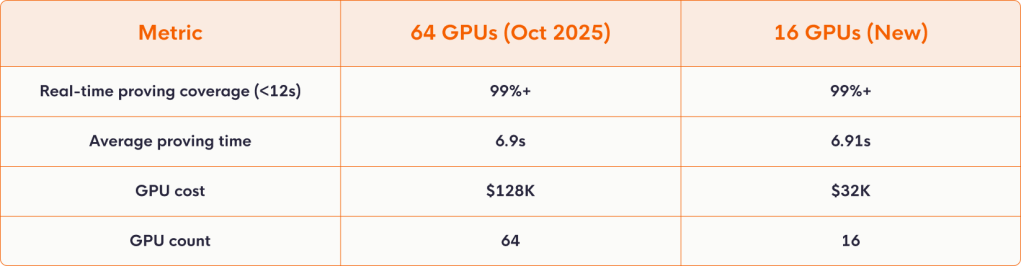
TL;DR: Pico Prism now achieves 99% real-time Ethereum proving with just 16 RTX 5090 GPUs across two machines, down from 64 GPUs in our original release. Average proving time holds at 6.91 seconds. GPU costs drop from $128K to $32K, with total hardware setup estimated at ~$100K. The breakthrough comes from a redesigned dual-machine distributed architecture that keeps all GPUs fully utilized through intelligent scheduling and data locality optimizations.
Recap: Where We Started
In October 2025, we announced Pico Prism and its real-time proving results for Ethereum L1 blocks. Using 64 RTX 5090 GPUs across eight servers, Pico Prism proved 99%+ of Ethereum blocks within 12 seconds, with an average proving time of 6.9 seconds and a hardware cost of $128K.
Those results marked a significant step toward the Ethereum Foundation’s real-time proving goals. But the original announcement also included a commitment: achieve comparable results with 16 GPUs in the coming months.
We delivered on that commitment.
The Results
Tested on the same benchmark set of 7,200 Ethereum blocks used in our original Pico Prism announcement, the 16 GPU configuration achieved:
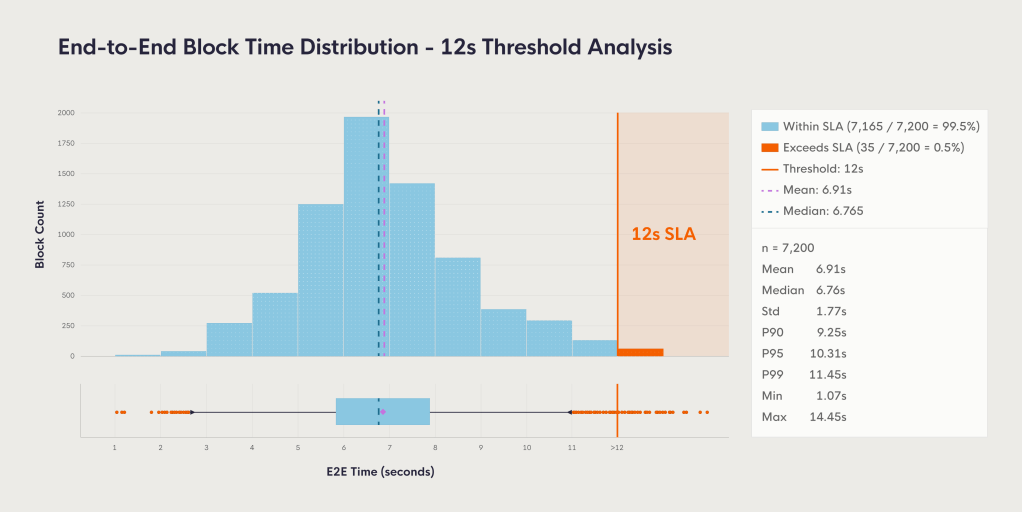
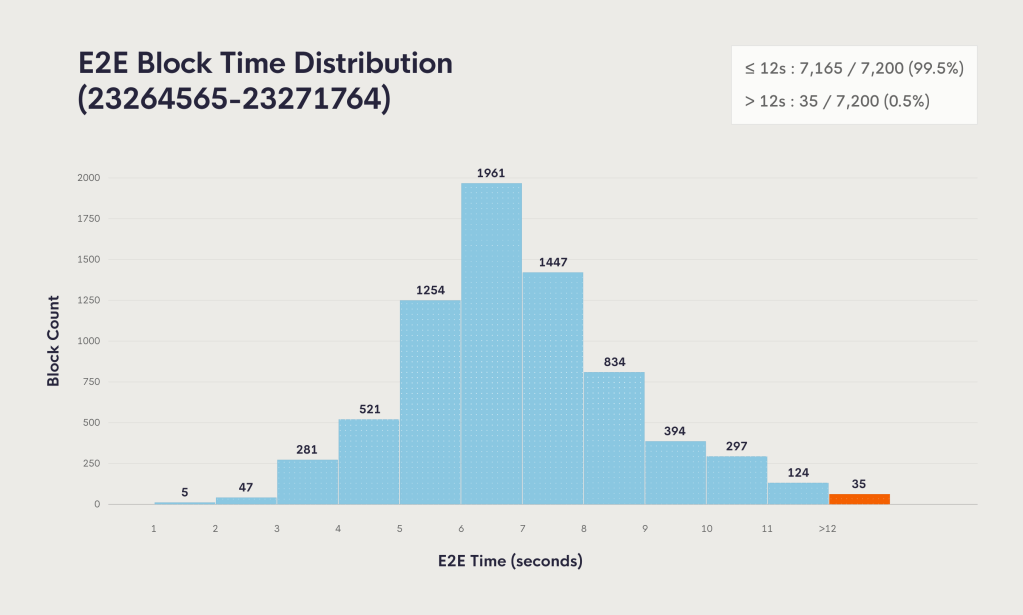
The distribution tells a clear story: out of 7,200 blocks, 7,165 were proven under 12 seconds. The median proving time landed at 6.76 seconds, with 90% of blocks completing under 9.25 seconds.
How We Got Here: Dual–Machine Architecture
The original Pico Prism setup distributed proving across eight servers. That configuration delivered strong results, but the coordination overhead across that many machines left room for architectural improvement.
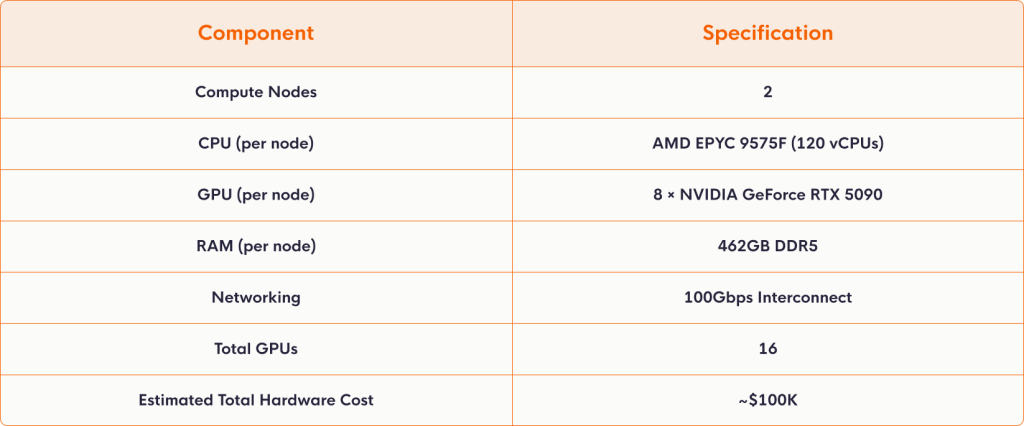
The new version consolidates everything down to two machines, each equipped with 8 RTX 5090 GPUs, connected by a 100Gbps interconnect. A lightweight scheduler coordinates work between them while all heavy computation stays local.
Two areas of improvement drive the efficiency gains:
Data Locality. The previous architecture spent significant resources moving data between eight machines. The new design keeps data where it’s needed, so machines spend their time proving rather than transferring information back and forth.
GPU Utilization. With eight machines, keeping every GPU busy at all times was a coordination challenge. The new architecture ensures all 16 GPUs are working continuously with no downtime between tasks, squeezing maximum performance out of every piece of hardware.
The result is virtually identical proving performance with 75% fewer GPUs.
Computing Infrastructure
What This Means
When we announced Pico Prism in October, GPU costs alone totaled $128K across 64 RTX 5090s. That figure is now $32K with just 16 GPUs, a 75% reduction. Total hardware cost for the full two-machine setup, including CPUs, memory, and networking, comes in at approximately $100K, right at the Ethereum Foundation’s target for real-time proving infrastructure.
The Ethereum Foundation has now declared the performance race effectively won and shifted its focus toward security foundations for L1 zkEVM integration, setting milestones for 128-bit provable security by end of 2026. With Pico Prism now delivering 99%+ real-time proving at ~$100K total hardware cost, the performance side of that equation is settled. We’re actively working alongside the EF’s security roadmap to ensure Pico Prism meets the soundness requirements for mainnet-grade deployment.
The path from 64 GPUs to 16 also tells a broader story about proving efficiency. Raw GPU count was never the real bottleneck. Architectural decisions around how work gets distributed, how data flows between machines, and how GPUs stay utilized matter as much as the hardware itself. Smarter coordination delivered a 75% reduction in GPU requirements and cost with virtually identical proving performance.
We’re continuing to optimize Pico Prism and will share updated benchmarks as the architecture evolves further.
Our benchmarks remain fully reproducible. The binaries are available at: https://github.com/brevis-network/pico-ethproofs
About Brevis
Brevis is a verifiable computing platform powered by zero-knowledge proofs, serving as the infinite compute layer for Web3. Applications can offload expensive computations off-chain while proving every result on-chain. The Brevis stack includes Pico zkVM for general-purpose computation, the ZK Data Coprocessor for trustless access to historical blockchain data, Pico Prism for real-time Ethereum block proving (99.6% coverage, 6.9s average), and ProverNet, a decentralized marketplace for ZK proof generation. To date, Brevis has generated hundreds of millions of proofs across 40+ protocols on 6 blockchains.
Dive Deeper into Brevis:
Website | X | Discord | Pico zkVM | ZK Data Coprocessor | Incentra | ProverNet
Interested in building with Brevis? Reach out to us to explore ideas!
 Brevis Network© 2023